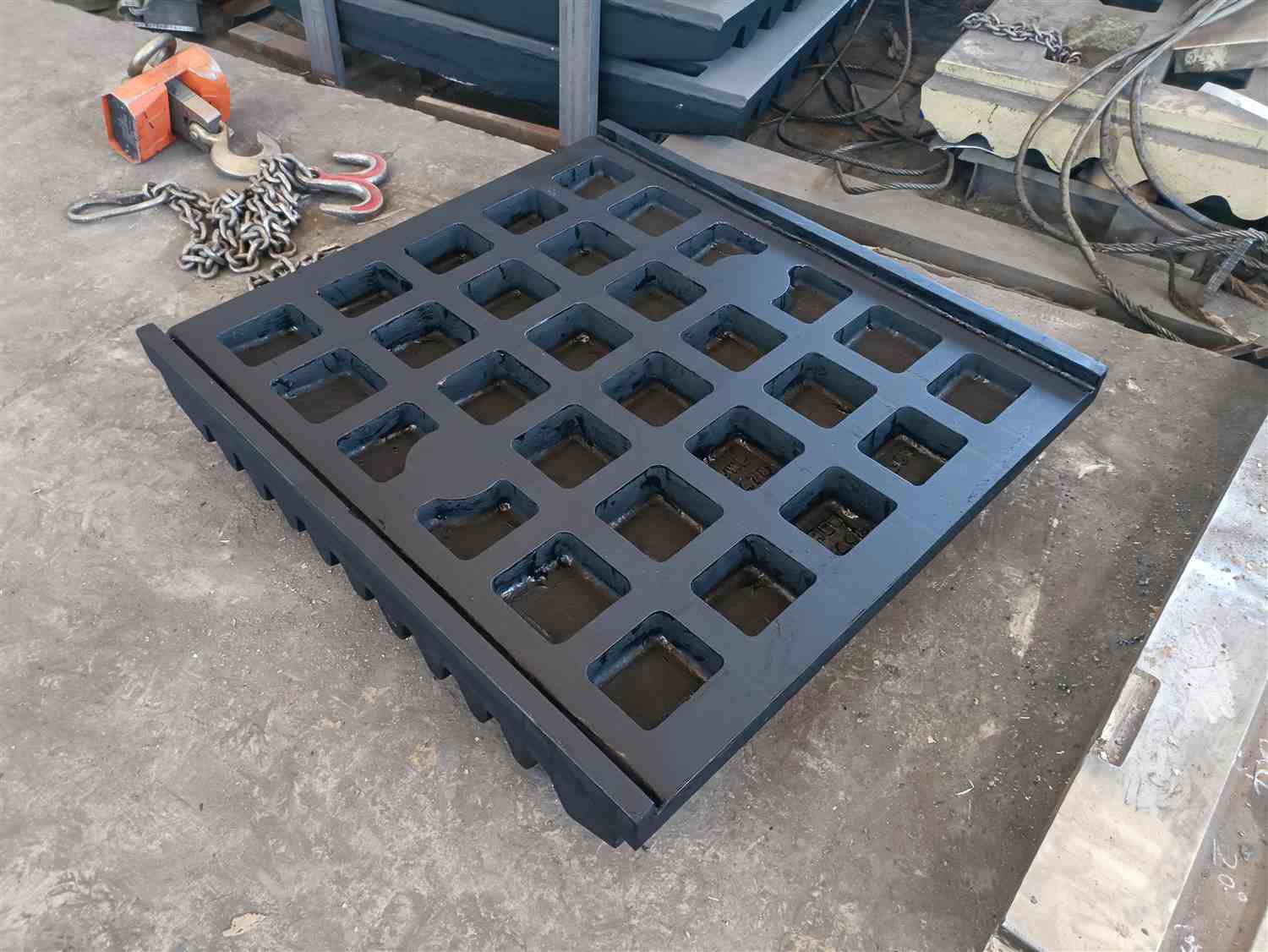
Jaw Plate
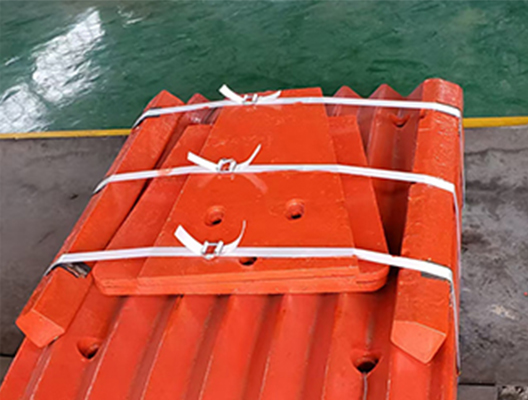
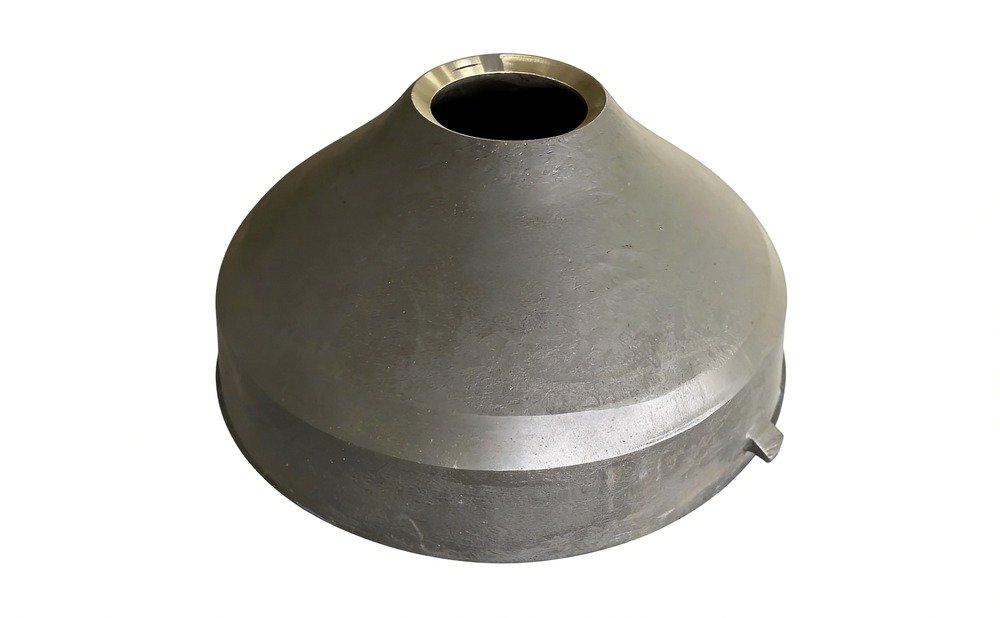
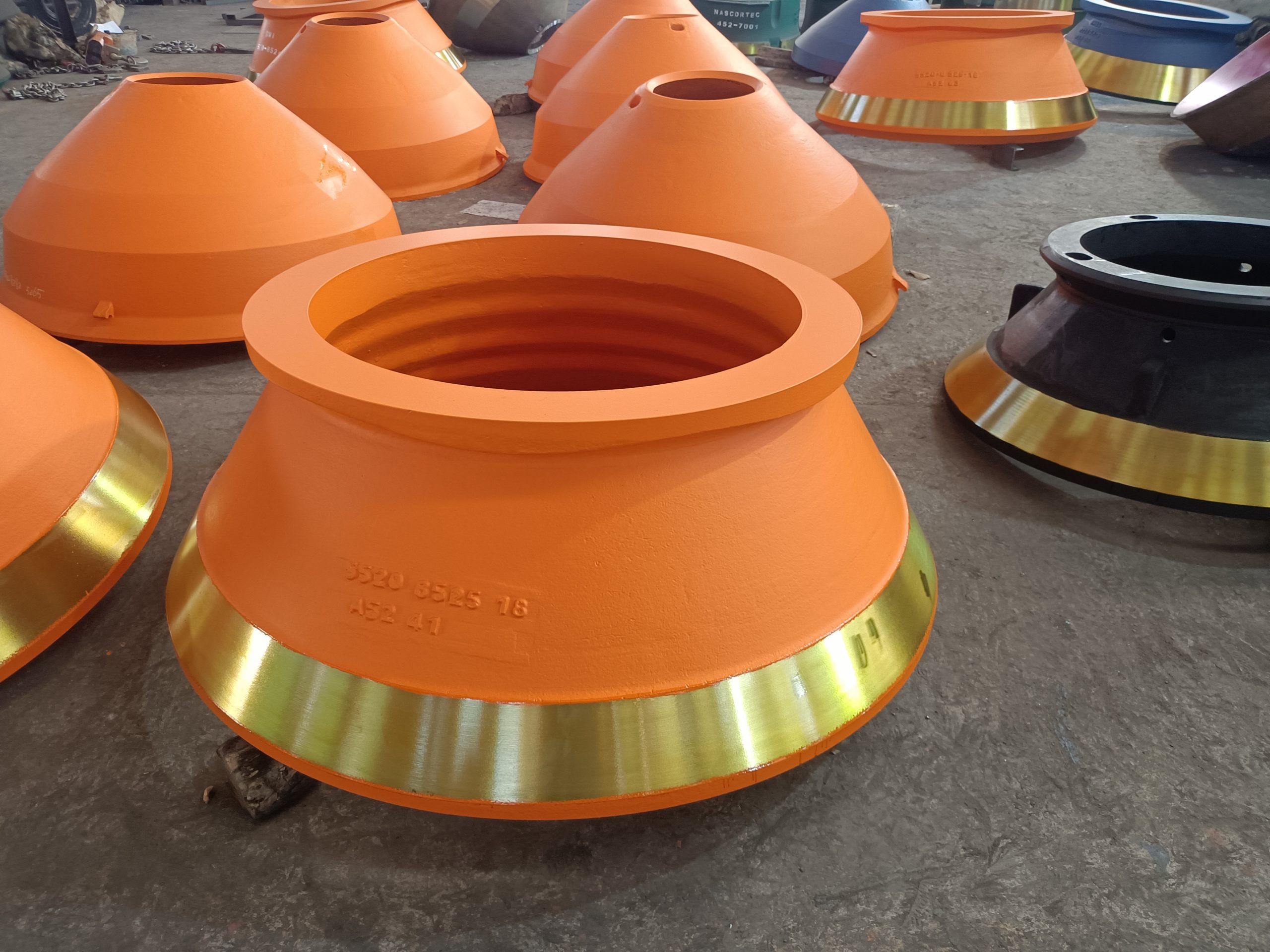
The 7055308121 is the replacement mantle for the Metso HP100 cone crusher. If you know cone crushers, you know the mantle is the muscle of the machine. It sits directly on top of the main shaft head assembly and gyrates eccentrically against the stationary bowl liner. Every time that head nut tightens down and the eccentric throws the shaft into its orbit, the mantle is what actually breaks the rock.
This specific part number covers the Medium (M), Coarse (C), Extra Coarse (EC), and Super Coarse (SC) cavity profiles. That means it is designed to handle the heavier, larger feed sizes that the HP100 is typically thrown into. It is not for fine crushing. It is for taking big chunks and breaking them down.
The Metso HP100 is the smallest model in the hugely popular HP series. You will not find it in a massive primary gyratory setup. Instead, we usually see these machines working as secondary or tertiary crushers in small to medium aggregate plants, or mounted on tracked portable plants.
Because it is a smaller machine, the HP100 is often pushed hard. Plant managers try to get every last ton out of it. That means the wear parts take a beating. When you are running a portable plant in Western Australia and the feed size jumps from 40mm to 80mm without you noticing, that mantle is going to get chewed up fast if it is not the right profile or material.
You can have the perfect cavity profile, but if the metallurgy is wrong, you are just throwing money into the hopper. We cast these mantles in a few different manganese steel grades, and picking the right one comes down to your specific rock.
Here is a real example from the field. We had a customer in a Queensland basalt quarry who was burning through standard Mn13 mantles on their HP100. They were replacing them every three weeks. The basalt was just too hard and abrasive for the standard grade to work-harden properly. We switched them over to our Mn18Cr2 castings. The initial hardness was higher, and the surface work-hardened much faster under that heavy basalt load. They ended up getting 40% longer life out of each mantle, which saved them about $8,000 a month in parts and change-out labor.
In our 40 years in this business, we have found that 90% of premature mantle failures have nothing to do with the steel. They come down to application errors.
If your top size feed is 80mm and you put a Medium (M) cavity mantle in the HP100, the rock will just ride on top of the liner. It will not nip properly. You will get terrible throughput and uneven wear. For an 80mm feed, you need to be looking at the Extra Coarse (EC) or Super Coarse (SC) profiles for this part number.
The HP series is designed to be choke-fed. That means the crushing chamber should be full of rock, right up to the top. If you are trickle-feeding the HP100, the rock just rolls around in the bottom of the chamber. The mantle wears out in a weird, uneven pattern, and your product shape goes to hell. We saw an Indian limestone plant running their HP100 in a trickle-feed setup. They went through mantles in ten days. Once we got them to keep the chamber choked, liner life doubled.
Bucket teeth and drill bits will wreck a mantle in seconds. Make sure your overhead magnet and tramp iron release system on the HP100 are actually working. Another thing that kills mantles is poor backing compound application. If you do not fill the void between the mantle and the head properly, the liner will flex and crack under load.
We have been casting crusher wear parts for four decades. When we machine a 7055308121 mantle, we do not just guess at the dimensions. We use the exact OEM tolerances. The mating surfaces have to be perfectly flat so the mantle seats right against the head. If it is off by even a couple of millimeters, it will crack on the first shift.
We also pour our own heats. If you have a weird application—maybe you are crushing highly abrasive slag and need a different alloy mix, or you need a custom cavity profile because you are modifying your product spec—we can do that. We do not just sell off the shelf. We engineer the part for your specific headache.
Choosing between the M, C, EC, and SC profiles can be a headache if your feed size fluctuates. If you are not entirely sure which cavity profile fits your application, or if you are just tired of replacing mantles every few weeks, drop us a line. Send over your feed gradation and your closed side setting. We have probably seen your exact problem before, and we can tell you exactly which mantle and manganese grade will fix it.