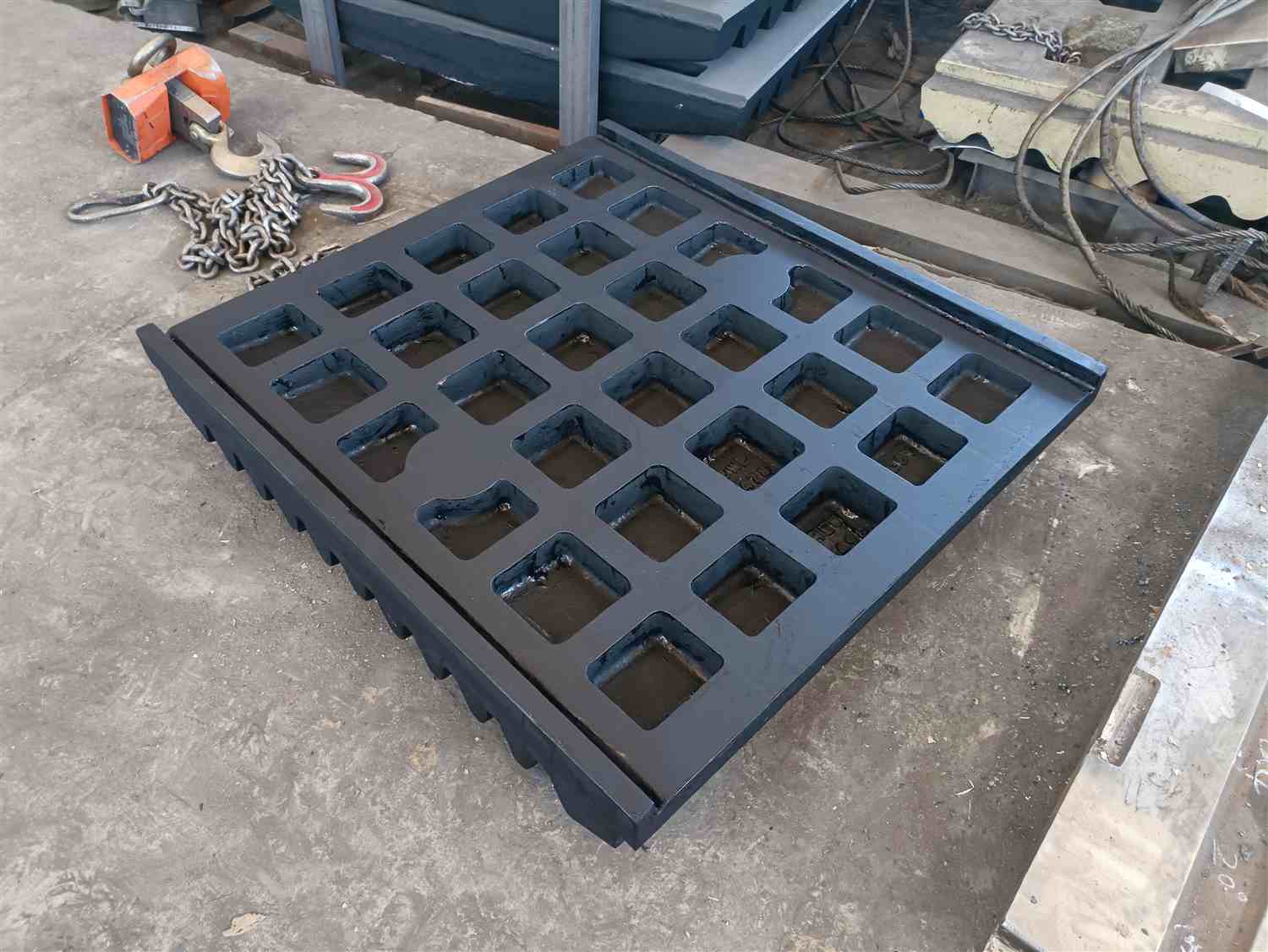
Jaw Plate
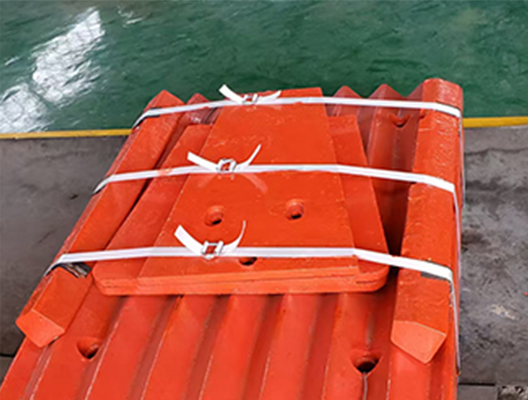

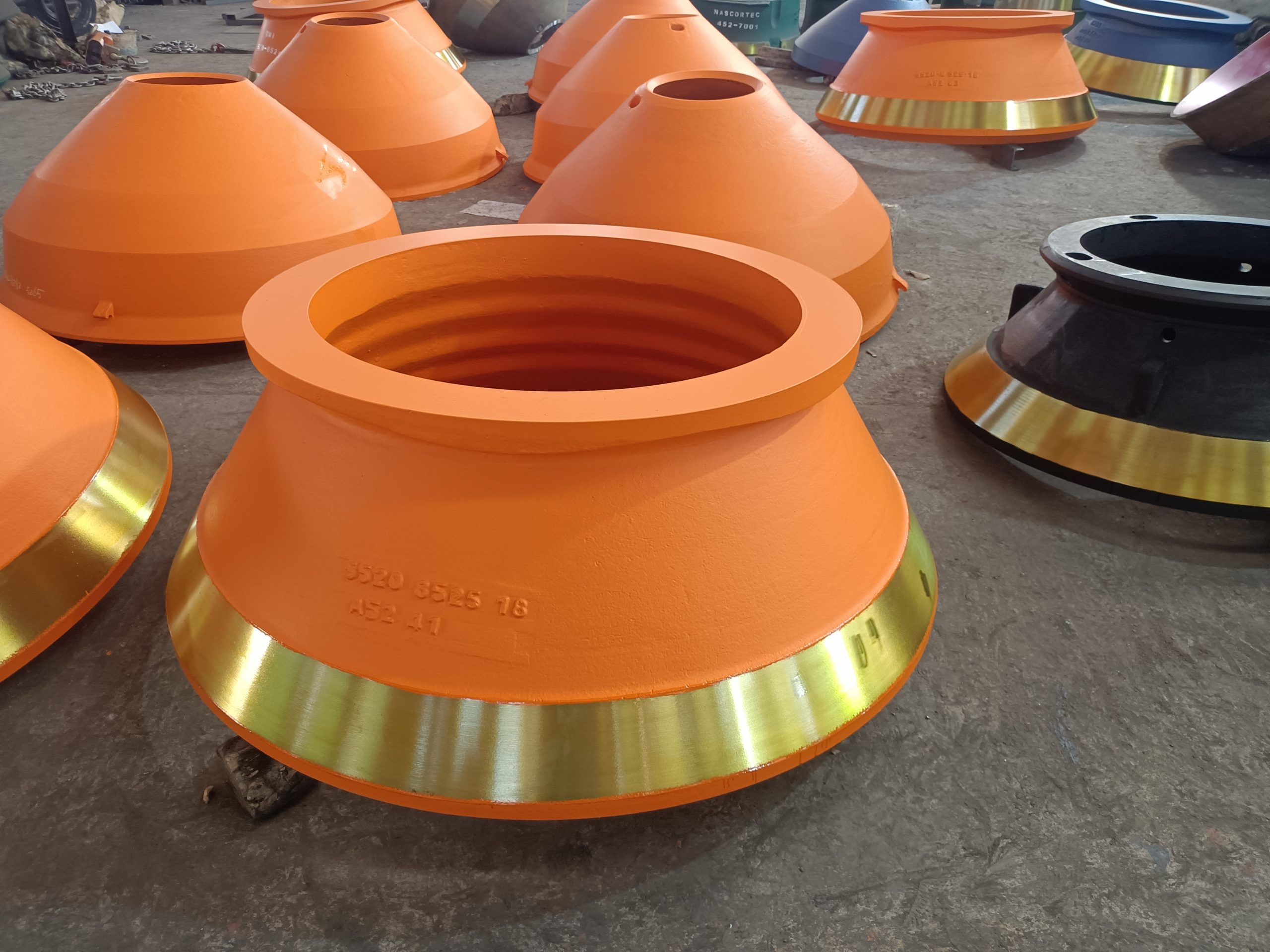
Let’s get the basics straight first. The 442.7230-02 is the moving cone liner — the mantle — for a Sandvik CH440 cone crusher. It sits on the head of the main shaft, and it gyrates. That gyrating motion is the whole crushing action: rock gets squeezed between this mantle and the stationary concave ring above it, then drops when the chamber opens.
New, it weighs 655 kg. That number matters more than people think. A CH440 mantle in a medium-fine chamber starts at roughly 1,443 lbs and comes out around 950 lbs when the customer finally pulls it. Two hundred kilos of manganese gone. If your replacement arrives light, it’s not a smaller casting — it’s a thinner one, and you’ll be back in the same hole six months sooner.
The same machine also answers to CS440, H4800 and QH440 depending on whether it’s the stationary or mobile version. Same 442.7230 mantle fits all of them. We get this question a lot from customers who bought a used H4800 and can’t find the CH440 number in their manual.
Here’s where people get tripped up, and it’s worth being blunt about it.
On our side, the suffix is a material tag. 442.7230-02 means the CH440 mantle cast in Mn18Cr2. If you order -02 from us, that’s what ships. Simple.
But Sandvik’s own catalogue uses the same 442.7230 family to split by chamber configuration — -01 for M1, -02 for M2, -03 for M7, -05 for M9. Different profiles, different liner geometry. So when you quote a number to a supplier, say both things: the part number and the chamber you’re running. A supplier who only hears “442.7230” and ships whatever’s on the shelf can hand you a mantle that physically bolts up but crushes wrong.
If you’re not sure which chamber you have, send us the old liner’s profile or the crusher’s serial. We can usually tell from the wear pattern.
Sandvik builds the CH440 around four standard mantles — A, B, HC and EF — matched against a range of concaves. The pairing is what defines the chamber, and the chamber is what defines whether the machine does what you need it to do.
Matching a 655 kg mantle against the wrong concave is one of the most expensive mistakes we see. The liners will fit. The crusher will run. But the nip angle goes wrong, you get slabby product and a liner that wears into a shape it was never designed for. A customer in Chile burned through three mantle sets in fourteen months before anyone checked whether the concave ring actually matched. It didn’t.
Standard manganese for a CH440 mantle is Mn13Cr2 — the classic Hadfield grade, around 12-14% manganese. It work-hardens under impact and it’s forgiving. For clean, well-graded feed it does the job.
Mn18Cr2 pushes manganese to 17-20% and holds 1.7-2.4% chromium. What you get for the extra cost:
On limestone and softer aggregate, Mn13Cr2 is often the smarter buy. You’re not gaining much from the upgrade and you’re paying for it. On hard abrasive feed, Mn18Cr2 typically returns 20-35% more life. We’ve measured that on CH440 mantles in Australian iron ore and on HP series cones running andesite. It’s not a marketing number, it’s what the wear profiles show.
Where the rock is really punishing, Mn22Cr2 is worth a conversation. We cast it for CH440 concaves already — the 442.8417-03 in our range is Mn22Cr2 at 843 kg — and it holds up where Mn18Cr2 starts to struggle.
Almost never the casting’s fault. Usually one of these:
Segregated feed. If the belt isn’t loading the chamber evenly, one side of the mantle does most of the work. You’ll see it in the wear profile — a deep scoop on one side, barely touched on the other. The liner isn’t worn out, it’s worn unevenly, and it fails at the thin spot long before the average thickness says it should.
CSS set too tight for the feed. Running a medium chamber at a fine setting to chase a product spec is a common shortcut. It also means the mantle is being hammered rather than squeezed, and you get cracking instead of gradual wear.
Feed size over the chamber’s limit. A CH440 in MF configuration wants a controlled top size. Oversize lumps bridge at the nip point and the load spikes. That’s how you crack a 655 kg casting in a week.
Backing compound done badly. If the mantle isn’t properly seated on the head with the backing poured correctly, it moves. Micro-movement, then fretting, then a crack starting from the bore. We’ve pulled mantles where the wear surface was barely touched but the bore was destroyed.
Three things, and it takes five minutes:
We’ve been casting crusher wear parts for forty years. The 442.7230-02 we ship is CH440 mantle in Mn18Cr2, poured to OEM dimensions, heat treated, and checked on CMM before it leaves the floor. Material cert comes with it if you want one for your records.
We also carry the rest of the CH440 chamber — concaves from 799 kg up to 860 kg across the MF, M and C profiles, torch rings, head nuts, and the backing compound. If you’re doing a full liner change, we can put the set together so the chamber actually matches.
Not sure which chamber you’re running, or why the last set only lasted eight months? Send us a photo of the worn liner and the crusher serial. We’ve seen most of these before and we’ll tell you straight whether it’s the part, the setup, or the feed.