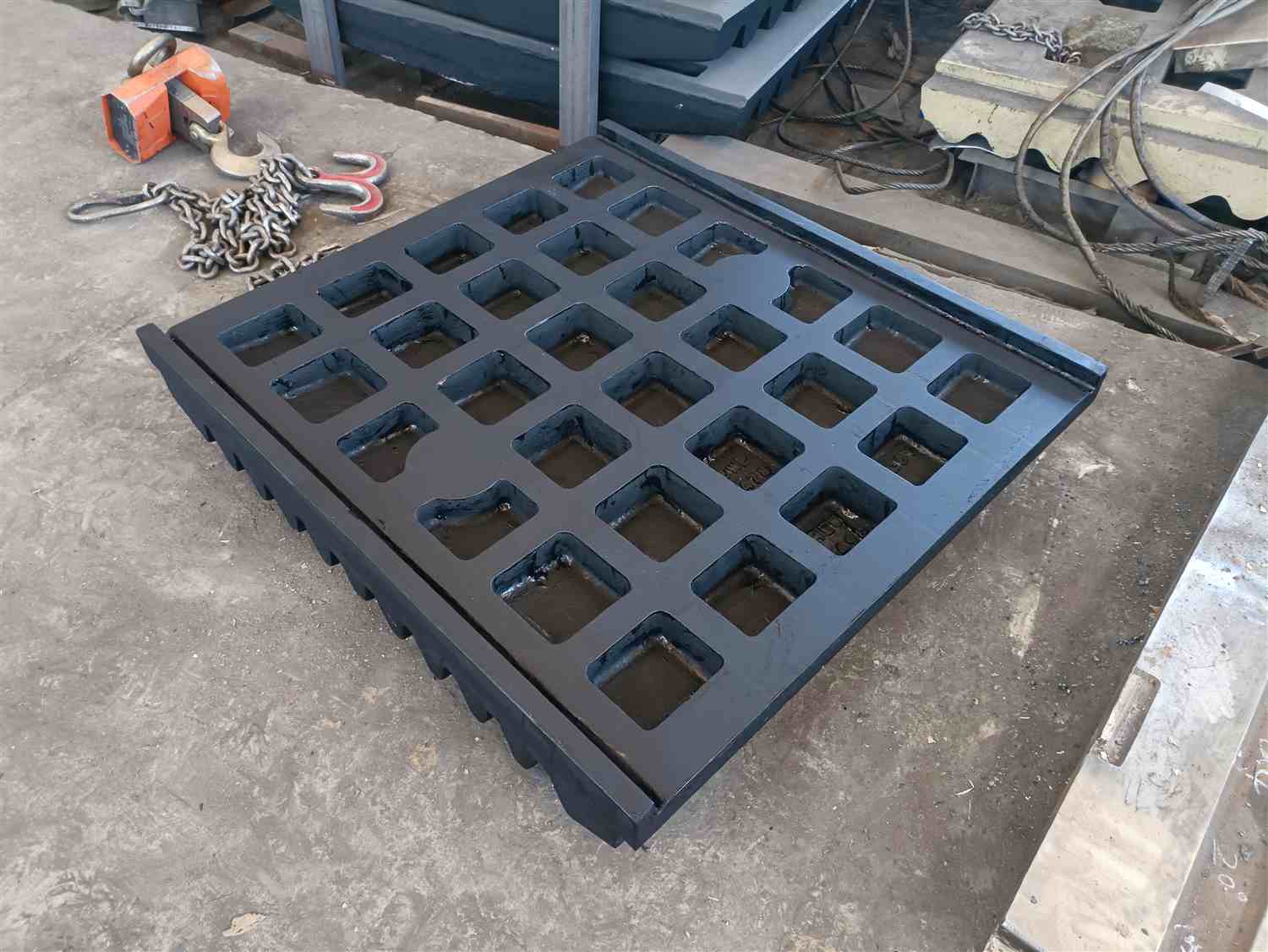
Jaw Plate
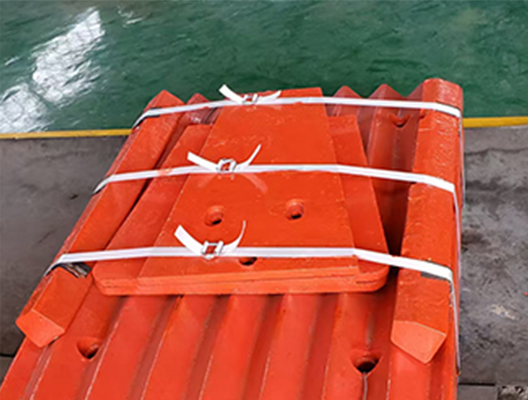
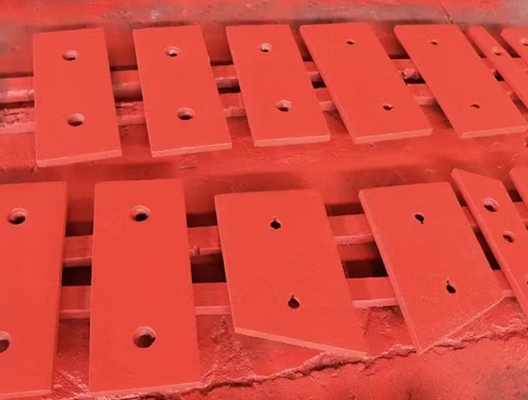
Let’s clear this up first, because a lot of listings get it wrong. The Kleemann 2602992 is a feed plate — the German parts books call it a Aufgabeblech, and the Chinese drawings say 散料盘. It weighs about 13.6 kg. It is not a mantle, not a bowl liner, and not a concave.
That matters, because the feed plate does a completely different job. It does not crush anything. It sits above the crushing chamber and spreads the incoming material so it drops into the cavity evenly, all the way around.
We’ve had customers order a “2602992 liner” expecting 500 kg of manganese and get a 13.6 kg steel plate. Then they call us confused. So let’s go through what this part actually is and why it’s worth paying attention to.
The 2602992 fits the Kleemann KX200 cone crusher — that’s the crusher inside the MOBICONE MCO 9 EVO and MCO 90 EVO mobile plants. The KX series runs:
On the KX200, the feed plate mounts on top of the crushing cone assembly, directly under the feed opening. Material comes off the feed conveyor, hits the plate, and gets deflected outward in a ring. From there it falls into the gap between the mantle and the bowl liner.
That deflection is the whole point. Without it, feed lands in one spot, piles up on one side of the chamber, and the crusher runs lopsided.
Kleemann’s own parts guide says it plainly: unlike the torch ring, the feed plate does not need to be replaced when you change the bowl liner.
That tells you something about how it’s built and how it wears. The feed plate takes abrasion — sliding, scuffing, grit running across a flat surface — but it doesn’t take the compression and impact that the mantle and bowl liner see. Different wear mechanism, different material, much longer life.
Most machines go through several sets of crushing tools before the feed plate needs attention. On a well-run plant, you might replace it once at a major overhaul and never think about it again.
Here’s the part that catches people. A worn feed plate doesn’t fail loudly. It doesn’t crack and stop the plant. It just stops spreading material properly, and the damage shows up somewhere else.
We had a quarry in northern Germany running an MCO 9 EVO on granite. They were getting about three months out of a set of bowl liners and couldn’t figure out why — the liners were wearing to a wedge shape, one side down to the backing, the other side barely touched. They blamed the casting. Then someone pulled the feed plate and found a dish worn into one side of it, maybe 8 mm deep. Material had been sliding off one edge instead of spreading evenly.
New feed plate, and their liner life went back to what Kleemann’s wear tables predicted. The plate cost them a fraction of what they’d been burning in liners.
What to watch for:
If your liners are wearing to a wedge or showing a clear hot spot, check the feed plate before you blame the casting. It takes ten minutes and it’s the cheapest thing on the list to rule out.
The 2602992 is cast in high manganese steel, roughly 13.6 kg, with the mounting pattern and deflector geometry matched to the KX200 head assembly.
High manganese is the right call here, and it’s worth explaining why. Austenitic manganese steel — the Hadfield grade, typically 12–14% Mn — work-hardens under impact. The surface starts out around 200 HB and climbs past 500 HB as rock hammers into it. The feed plate takes exactly that kind of load: material dropping off the conveyor onto a flat plate, thousands of times a shift, year after year.
So the plate gets harder the more you use it, sitting on a tough austenitic core that resists cracking. That’s why these outlast a plain wear plate by a wide margin.
Mn13 (12–14% Mn) is the standard grade for this application. Where the rock is more abrasive and the plate wears faster than you’d like, Mn18Cr2 or Mn20Cr2 is worth the step up — the chromium addition keeps the austenite stable and holds hardness longer under sustained load. We cast to the drawing and supply a material certificate on request.
Two things trip people up on this part number.
First, the cross-reference. The 2602992 also shows up as WX2602992 in some catalogues. Same part. If a supplier quotes you a “2602992” that weighs 500 kg, you’re being quoted a bowl liner under the wrong number.
Second, fitment. The KX200 and KX250 share a lot of tooling but not everything. If your machine is a late MCO 90 EVO or a rebuild, send us the serial number and we’ll confirm against the drawing before anything ships.
We’ve been casting crusher parts for 40 years. Feed plates aren’t the glamorous end of the catalogue — nobody calls us excited about a 13.6 kg steel plate — but we make them to drawing, with the mounting pattern drilled to match and the deflector profile formed rather than flame-cut and left rough.
When you order a 2602992 from us, you get the dimensions checked against the OEM drawing, a material certificate if you want one, and a straight answer about lead time.
If you’re chasing a liner wear problem and you’re not sure the feed plate is involved, send us a photo of the plate and a photo of the worn liner. We’ve looked at a few thousand of these. We can usually tell you which one is the cause.