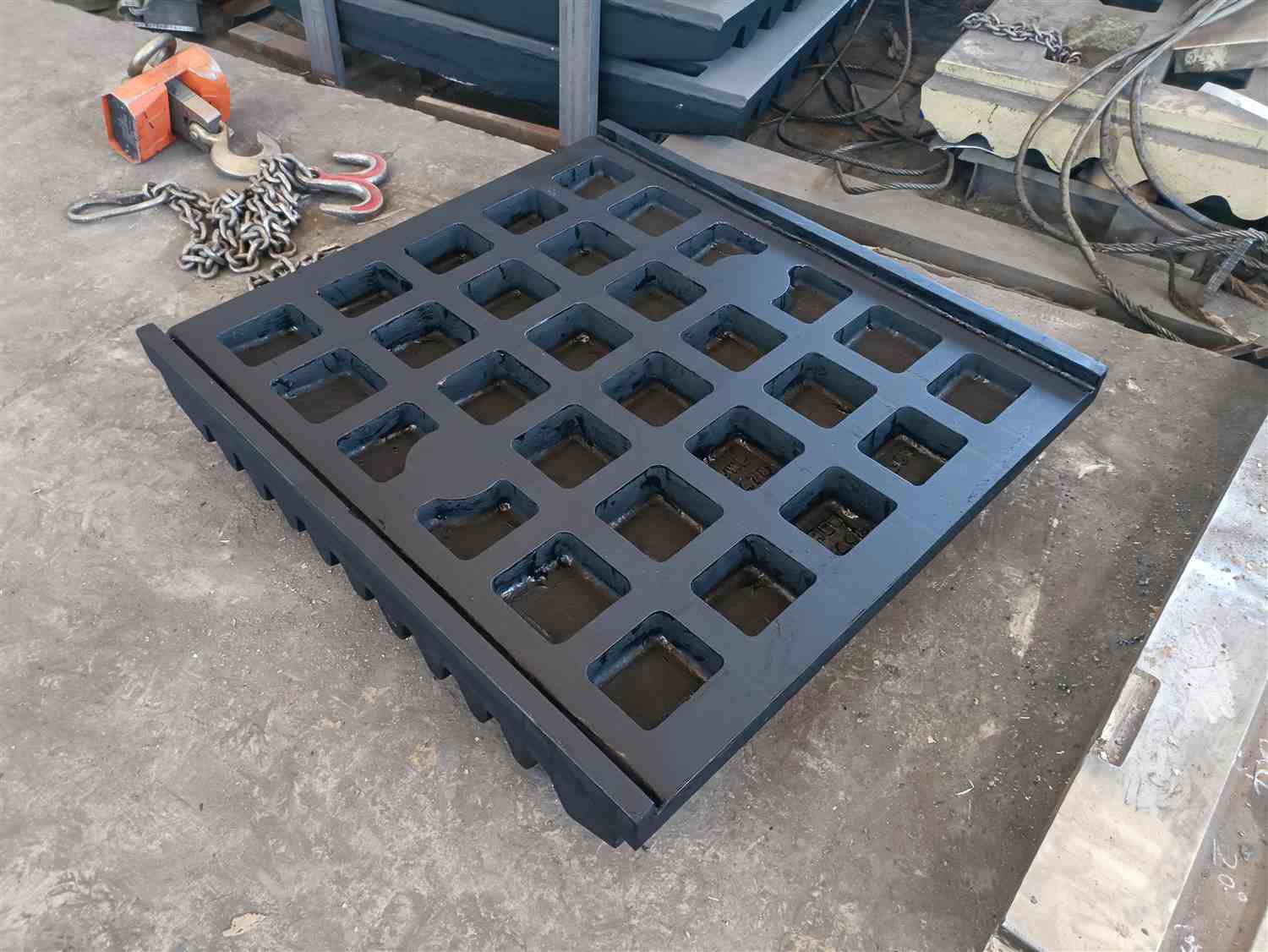
Jaw Plate
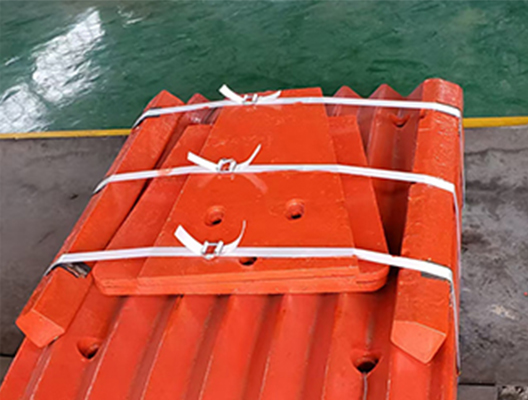
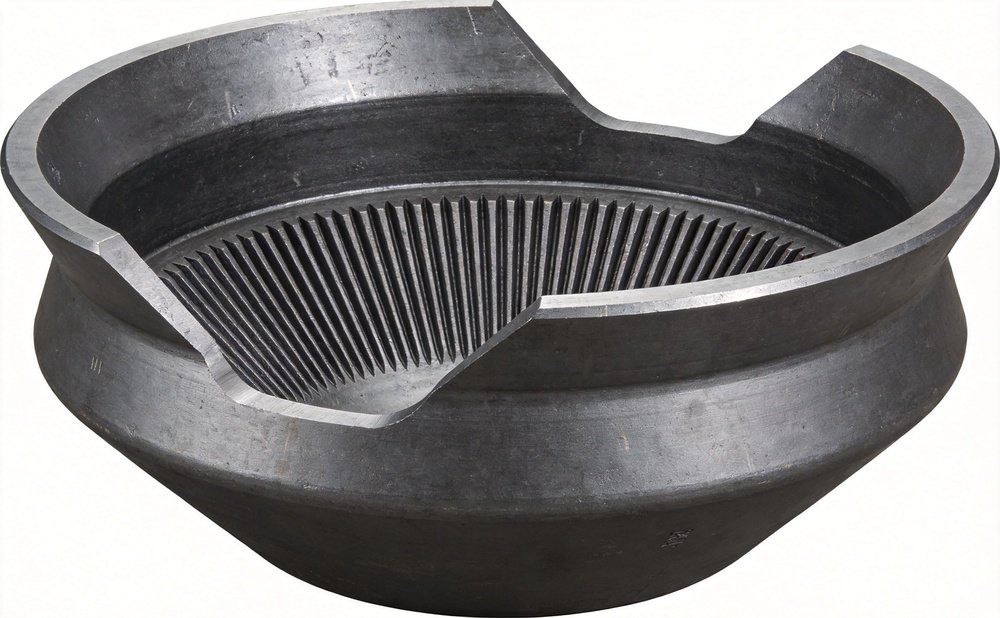
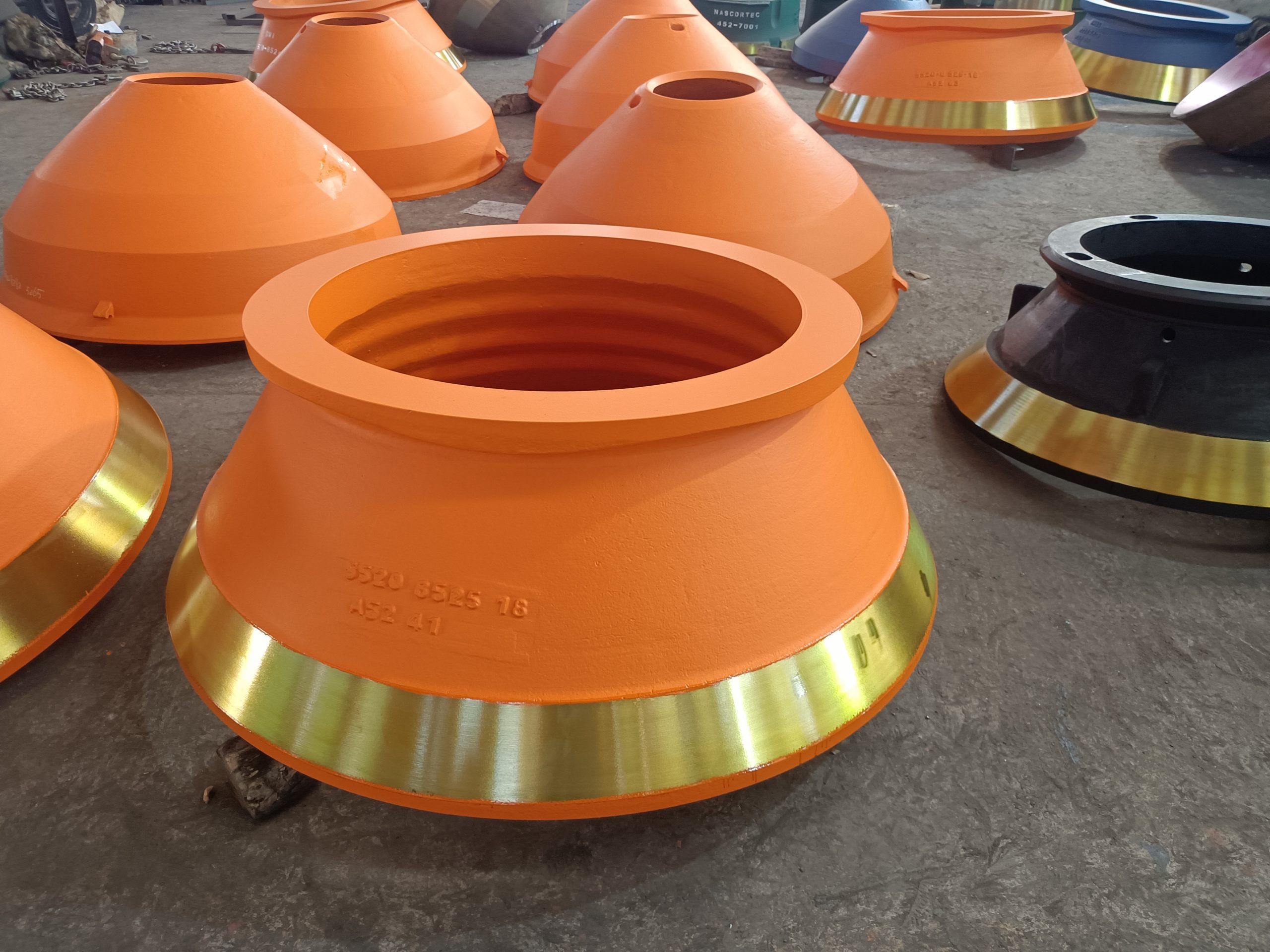
If you’re running a Metso HP300 in standard configuration, you already know the mantle takes the brunt of every ton that goes through the chamber. Part number 7055308258 is the STD (standard) cavity profile mantle — the one that sits on the main shaft head and does the actual crushing work against the bowl liner.
We’ve been casting these mantles for HP300 crushers for years now. The dimensions match the OEM spec exactly — same head angle, same parallel zone, same bolt pattern. No guesswork during installation.
The mantle on an HP300 cone crusher rotates eccentrically around the main shaft, pressing rock against the stationary bowl liner (concave). The STD cavity profile is designed for medium feed sizes — typically 80-150mm feed with a closed-side setting around 16-25mm. You’ll see this configuration at aggregate quarries producing road base, at sand and gravel operations, and in hard rock mining where the secondary crushing stage needs consistent product shape.
The HP300 is part of Metso’s HP series hydraulic cone crusher range. Related models in the family include the HP200 (smaller), HP400 (larger), and HP500. While they share the same crushing principle, each model uses different part numbers. Don’t mix them up — the mantle seating surface diameter and bolt circle are model-specific. If you’re also looking at the HP300 standard mantle (7055308252) or need the matching bowl liner, we can supply those as a matched set for consistent crushing geometry.
For the HP300 mantle, we typically recommend Mn18Cr2 (18% manganese with 2% chromium) as the default material. Here’s why.
Mn13 is the baseline — it’s cheaper, and it works fine for soft, low-abrasion materials like limestone with low silica content. But most of our customers running HP300s are processing harder rock: granite, basalt, river gravel, iron ore. In those conditions, Mn13 work-hardens but doesn’t develop enough surface hardness to resist micro-cutting. You end up with a mantle that wears unevenly, loses its profile after 300-400 hours, and starts producing oversize material.
Mn18Cr2 changes the game. The extra manganese gives deeper work-hardening — surface hardness climbs to HB 500-550 under impact loading. The 2% chromium refines the carbide structure, which improves resistance to abrasive wear without making the material brittle. We had a customer in Queensland running an HP300 on basalt with Mn13 mantles — they were replacing every 450 hours. Switched to our Mn18Cr2, got 700+ hours before changeout. That’s a 55% life improvement, which in their case saved about $18,000 a year in parts and downtime.
For extremely abrasive conditions — like quartz-rich sandstone or taconite — we can also supply Mn22Cr2 or even high-chrome inserts on the feed zone. But for most HP300 applications, Mn18Cr2 hits the sweet spot between cost and lifespan.
After 40 years in this business, we’ve seen a lot of mantles wear out too early. The mantle itself isn’t always the problem. Here are the usual suspects:
When you pull a worn mantle for inspection, look at the wear pattern before installing the new one. It tells you exactly what’s going on in your chamber — and whether your new mantle will last or repeat the same failure.
We’ve been manufacturing crusher wear parts for over 40 years. Our foundry produces HP300 mantles in all standard cavity profiles — STD, SH (shorthead), EF (extra fine), and everything in between. Every casting is poured from certified heat-treated manganese steel, dimensionally checked against OEM drawings, and hardened to spec.
OEM fitment is non-negotiable for us. The bolt holes line up. The seating surface matches the head geometry. The parallel zone angle is correct. We’ve seen too many aftermarket mantles that are “close enough” — close enough that they go on the shaft but wear out 30% faster because the crushing geometry is off by a degree or two.
If you need something outside the standard range — a custom cavity profile for unusual feed material, a special alloy for extreme abrasion, or modified dimensions for a non-standard application — we can work with you on that too. Our engineering team has designed hundreds of custom profiles over the years.
If you’re not sure which cavity profile suits your application, or if you’re seeing shorter-than-expected mantle life and want a second opinion on what’s going wrong, drop us a line. We’ve probably seen your exact situation before — and a quick conversation can save you a lot of trial and error.
Benny Chen
Sales Director
Email: benny@crusherwearparts.cn
Phone: +86 13857400969